

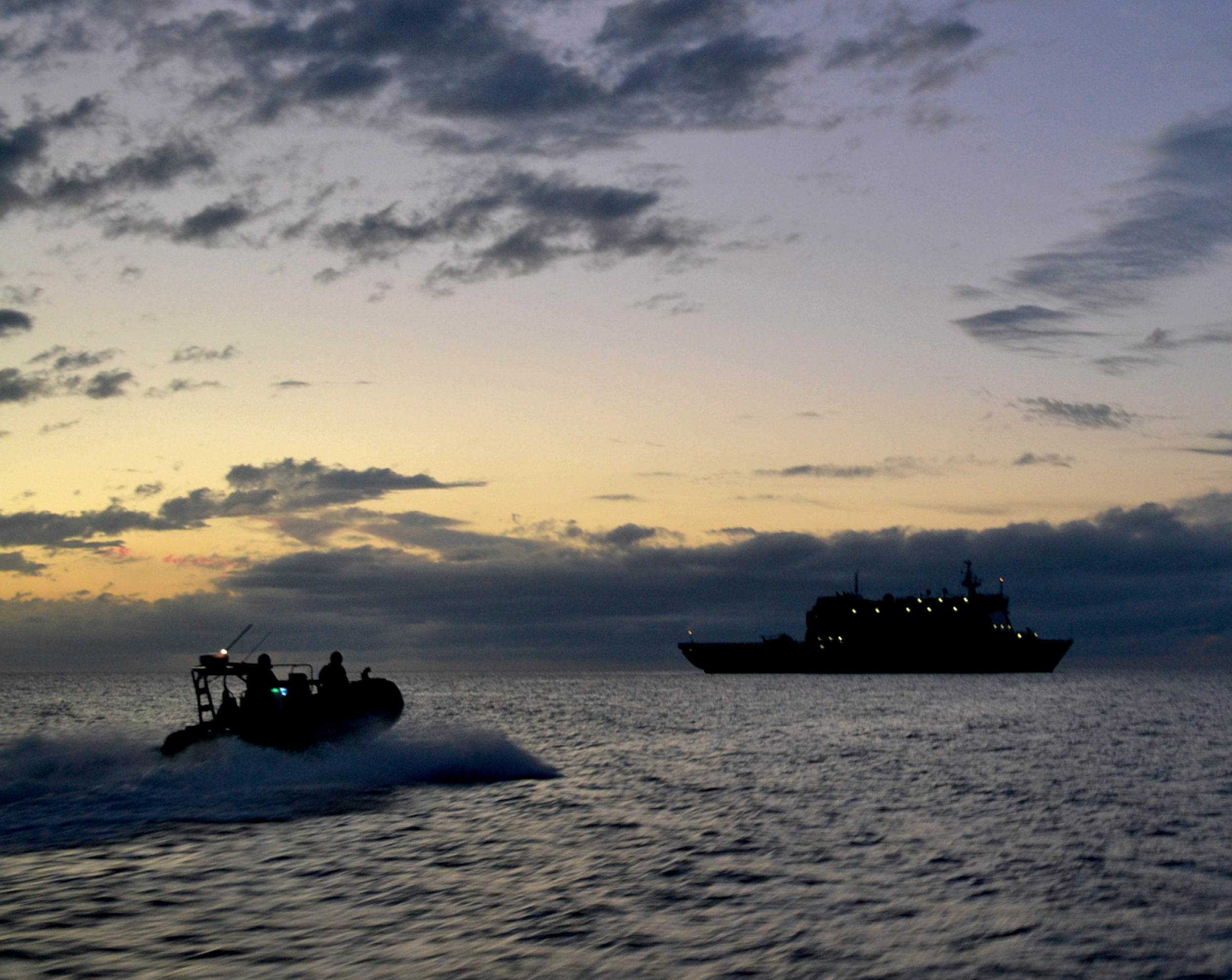
The Ship That Never Sleeps
By Amy Story, NZDF Civilian
It’s raining and shows no signs of letting up as I make my way to the port in New Caledonia. Dragging an embarrassingly large suitcase behind me I begin to question my packing choices as I reach the floating fortress that is HMNZS Canterbury, the Royal New Zealand Navy’s largest ship. There is no time to ponder if packing a litre of sunscreen was strictly necessary though as I’m soon inside a maze of boot-lined corridors meeting the 140-strong crew that make up the ship’s company.
It’s clear that a trade badge only describes one of at least three different roles personnel have onboard. Not only does the Medic treat the sick in the onboard hospital, but you can also find him hauling lines at the forecastle or doing the dishes in the galley after breakfast. The Naval Police Officer is just as likely to be found outside on the flight deck controlling helicopter landings as she is in the office dealing with disciplinary issues. Everyone works so hard, and the ship positively hums with productivity.
By day three I’m quickly getting used to the pipes over the loudspeakers alerting the crew to a multitude of horrors. Toxic gas, fire, man overboard and bomb scare alarms are the daily norm. These drills allow the crew to practise their responses in emergency situations, and observing the team efforts I’m comforted by their calm demeanours and leadership in action. Daily ‘wakey wakey’ pipes and accompanying musical delights remain a recurring horror.
Moving from the bridge to the cargo deck I start to orientate my way around, sometimes successfully. Lieutenants and Able Rates work alongside each other on the bridge, the high pressure task of safely navigating the 9000-tonne vessel filling the warm air with serious tension and concentration. A floor below in the Joint Ops room Australian, French, Canadian and Tongan accents intermingle with the Kiwi twang.
In the galley, chefs sing along to Lorde and Avicii as they cook breakfast for over 300 personnel. Eggs, bacon, sausages, hash browns, porridge, cereals, fresh fruit and yoghurt are all on offer. Dinner menus including lasagne, chicken drumsticks, seafood chowder and grilled hoki are being finalised. Preparation for tonight’s dessert, a hot fudge cake requiring nine kilos of sifted flour, is underway.
A French Puma helicopter gracefully lands on the flight deck behind the Seasprite, carrying two pretend casualties as part of the exercise, two French medics and a doctor. The Royal New Zealand Air Force maintenance team swings into action, lifting the casualties on stretchers into the hangar. They are met by the onboard medics and quickly whisked away to the onboard hospital.
Down another two flights of stairs lies the cargo deck. The vast space has been expertly packed with over 50 military trucks by the dedicated New Zealand Army movements team who assure me that all of those years playing Tetris are finally paying off. It’s an impressive sight and an example of the close collaboration required between Services and nations for the exercise to be a success.
In the very bowels of the ship I reach the Machinery Control Room, a hive of activity with engines whirring, steel grinding, technicians conducting checks and monitoring computer activated alerts. Wearing ear muffs that render everything white noise and forced to rely on charades, I eventually manage to grasp which tanks turn sea water into drinkable water and which tanks are used to balance the ship.
The descent down through the ship ends in the ‘void’, the empty area between the outer skin of the ship and its inner workings. The pristine, narrow space unexpectedly soars up storeys above our heads. It’s eerily quiet and almost cathedral-like, waves lapping against the hull the only sound to be heard. It seems to be the only place onboard that belies the bustling energy, passion and drive of all those within.
Thank you to the entire ship’s company for being so welcoming and sharing your stories with me. A special shout out to LSTD Marieta Makasini, PONP Nicole Mattsen and POHCM Tiffany Kalin for also sharing your home.